
Beyond Boundaries: Innovative Strategies to Reshape the Future of Project Management
Times are changing and so is project management. Project management that is oriented towards meeting customer needs and defined goals, and where success is based on deliverables of the required quality within a limited schedule and budget, no longer meets the needs of new project scenarios. Successful project managers of the future will need to develop an entrepreneurial mindset and have engineering competencies that are able to connect project resources with dynamic, uncertain project value and dynamic, uncertain project resources through dynamic, reliable, and efficient project management.

In the field of project management, the main points of innovation include agile methodologies, hybrid project management models, data-driven decision making, artificial intelligence assistance, remote collaboration tools, and cross-functional collaboration. Among them, Agile methodology is an important innovation point. While traditional project management approaches are often too rigid to respond quickly to market changes, Agile methodology enables projects to adapt more flexibly and efficiently to changing needs through short-cycle iteration, continuous feedback, and improvement. Agile methodology not only improves the success rate of projects, but also greatly reduces product delivery time. This methodology is especially suitable for projects that need to respond quickly to changes in the market, such as software development and product design.
 youtube
Agile methodology originated in the field of software development, but its flexible and efficient characteristics make it quickly promoted in various industries. Agile methodology emphasizes short-cycle iteration, continuous feedback, and teamwork. At the beginning of a project, the team divides the entire project into small iteration cycles, usually two to four weeks each. At the end of each iteration, the team reviews the project to gather feedback and make adjustments. This approach not only identifies and resolves issues quickly, but also ensures that the project is always moving in the right direction.
Scrum and Kanban are two common practices of Agile methodologies mentioned in the AUCA course on YouTube, Scrum emphasizes the division of roles among team members and daily stand-ups, and ensures that the project is on track with short-term goals and regular retrospectives, while Kanban focuses more on process visualization and continuous improvement, and real-time monitoring of the project progress through Kanban tools to improve team transparency and collaboration. Kanban focuses more on process visualization and continuous improvement, using Kanban tools to monitor project progress in real time and improve team transparency and collaboration efficiency.
 Recommended for
- From Theory to Practice
- Mastering Agile Methods
- Enabling Rapid Iteration and Continuous Improvement
 youtube
The MedicalDeviceAcademy course on YouTube describes a hybrid project management model that combines the strengths of traditional waterfall management and agile methodologies for projects that need to meet both fixed schedules and flexible requirements. In a hybrid project management model, the macro plan of the project is managed using waterfall, while the execution of specific tasks is done using agile methods. This approach ensures that the overall direction of the project does not deviate, while maintaining flexibility at the micro level.
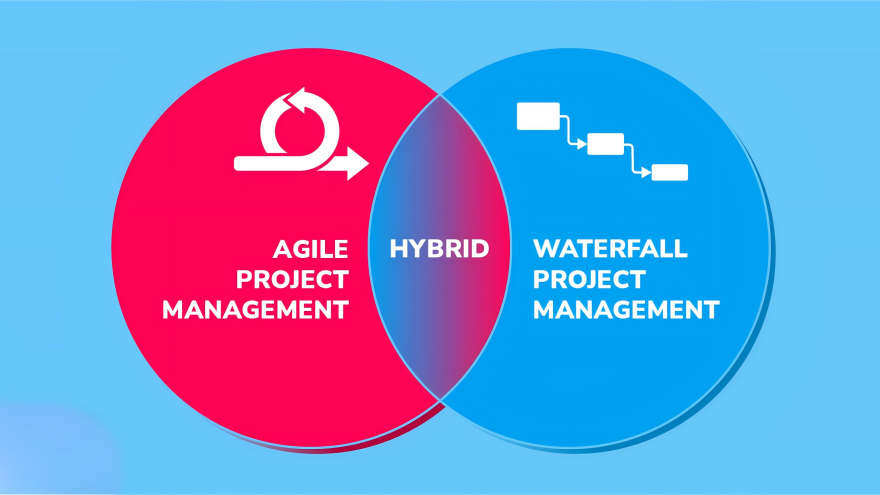
For example, a large construction project may adopt waterfall management in the overall planning and setting of key milestones to ensure that the project is completed on time. However, during the specific construction phase, each construction team may adopt agile methods to adjust and optimize according to the on-site situation, thus improving construction efficiency and quality. This approach not only effectively reduces project risks, but also improves team collaboration and project success.
Recommended for
- Unlock the potential of hybrid project management models
- Gain insight into how to combine traditional and agile methods
- Realize project management best practices
 youtube
With the development of big data technology, data-driven decision-making has become an important innovation point in project management. By collecting and analyzing project-related data, managers can make decisions more scientifically and improve project transparency and controllability. Data-driven decision-making can not only help teams predict project risks, but also provide optimization solutions to improve the success rate of projects.
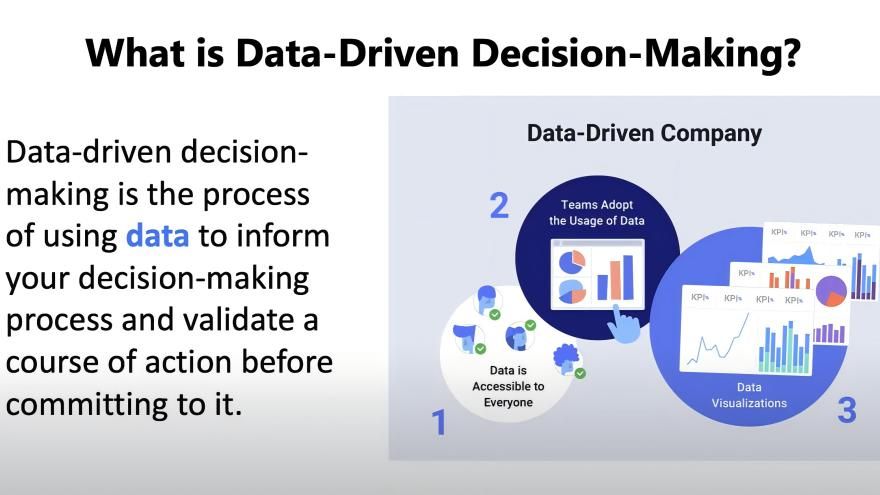
The SlingshotApp course on YouTube provides insights into a wide range of scenarios where data-driven decision making can be used in project management. For example, by analyzing historical project data, teams can predict the potential risks of current projects and take measures to avoid them in advance. By monitoring project progress and resource utilization in real-time, managers can identify problems and make adjustments in a timely manner. In addition, data-driven decision-making can help teams optimize workflow and improve efficiency and quality.
Recommended for
- data analytics to optimize project management processes that
- Improve team efficiency
- Enhance project success